| Recent developments |
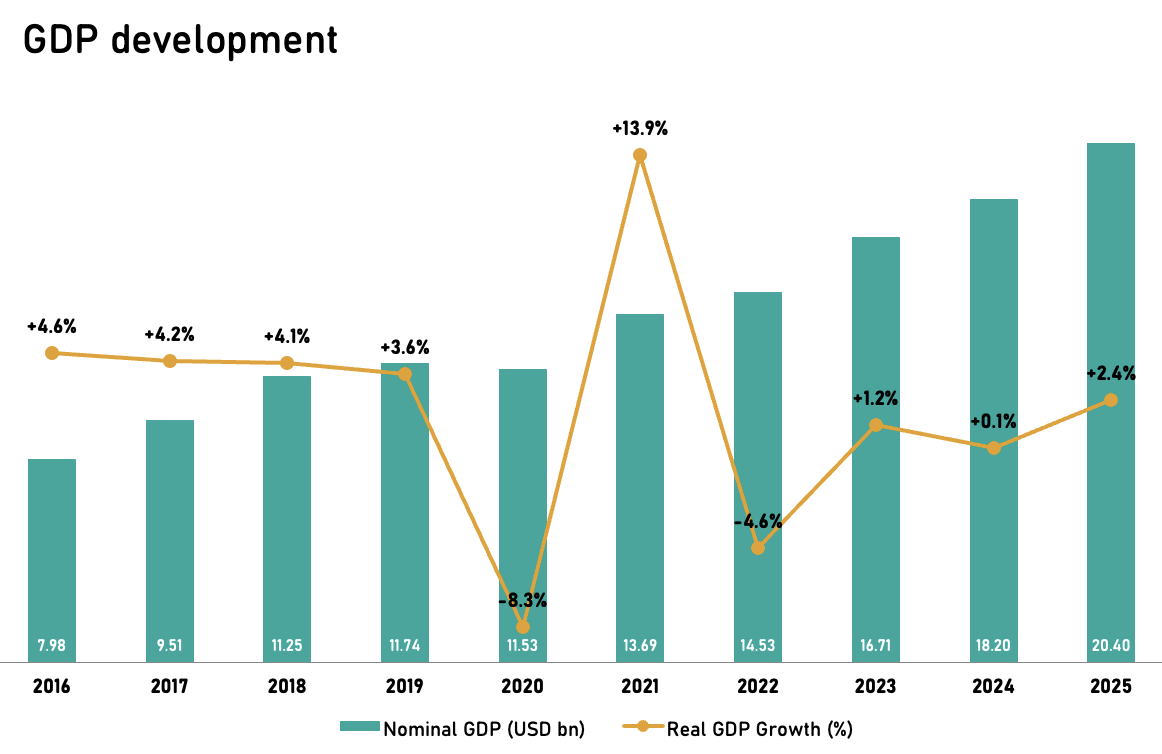
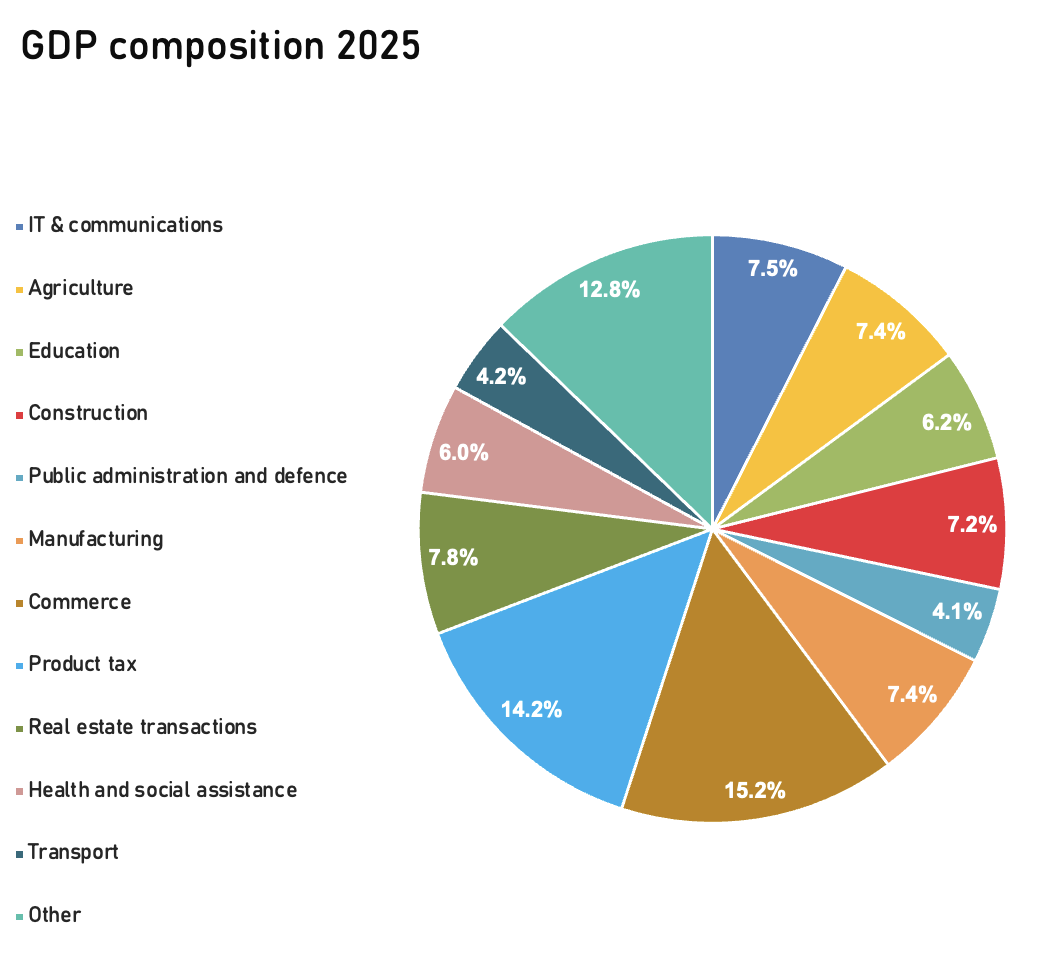
- Moldova's GDP grew +2.4% in 2025, driven by a strong agriculture harvest, IT, construction and household consumption.
- Energy price volatility poses the key 2026 risk: the Middle East conflict has driven oil and gas prices higher. As a net energy importer, Moldova faces knock-on effects across food prices and transport costs. S&P cut its 2026 growth forecast to 0.3%; IMF projects 1.9%; EBRD 3.0%.
- Moody's upgraded Moldova's sovereign rating to B2; S&P maintained its BB-/B rating with a stable outlook.
- Moldova joined the SEPA payment area on October 6, 2025, enabling cheaper euro transfers (estimated annual savings of €56–60 million for individuals and businesses).
- The September 2025 parliamentary elections secured a pro-EU majority (55/101 seats). EU accession negotiations started in June 2026.
|
|
Source: National Bureau of Statistics of Moldova, National Bank of Moldova, Ministry of Finance, IMF, World Bank, S&P Global, Moody's, maib IR Reports 2025–2026.
(*) Source: Average of revised forecasts of: World Bank (April 2026), IMF (April 2026), EBRD (February 2026), WIIW (April 2026) and Moldovan Ministry of Economy (December 2025)
|